
Scenographic Tempo and Collaborative Rhythm
Scenic design develops through timing as much as through image or space. Ideas are not only shaped by what collaborators see, but by when they see it, how they return to it, and how feedback moves through the production process.
This research looks at how the rhythm of collaboration changes across different working conditions. In some projects, design ideas move through recorded walkthroughs, shared digital spaces, and delayed responses. In others, they shift quickly through rehearsal, proximity, and direct adjustment in the room. In both cases, tempo shapes how ideas are understood, questioned, revised, and eventually carried into production.
Key Questions:
How do collaborators encounter design ideas across time?
What changes when design feedback happens outside a live meeting?
How do recorded walkthroughs affect reflection and revision?
How do shared visual spaces shape participation?
How does timing influence authorship and decision-making?
Ring of Fire
Asynchronous Collaboration, Shared Representation, and Distributed Tempo
(View Production Portfolio)
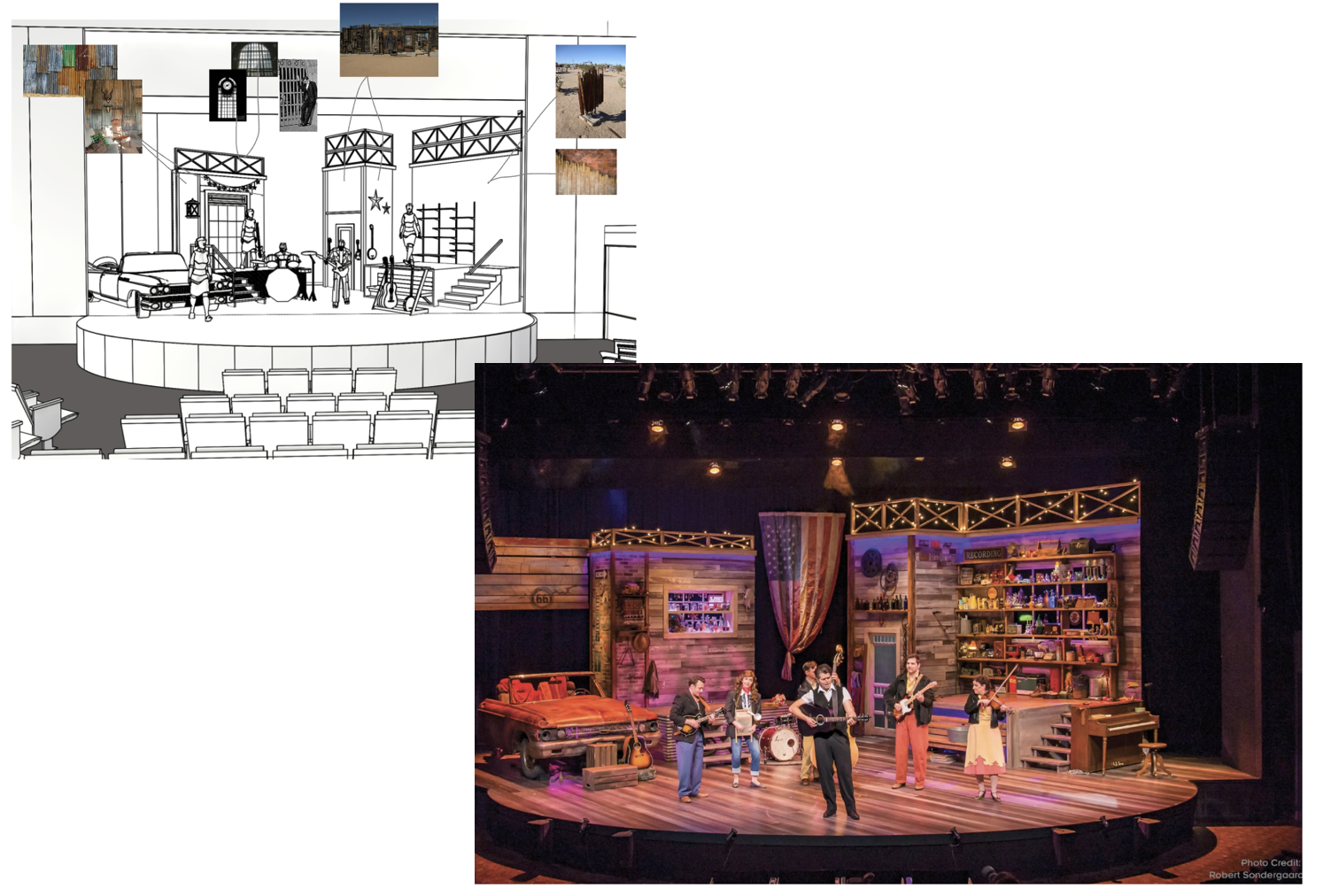
Ring of Fire became an important case study in how asynchronous communication changes the design process. Developed in collaboration with director Rachel Peake for the Arts Club Theatre Company, the project relied on shared digital spaces, recorded walkthroughs, and repeated exchanges that happened between meetings rather than only in real time.
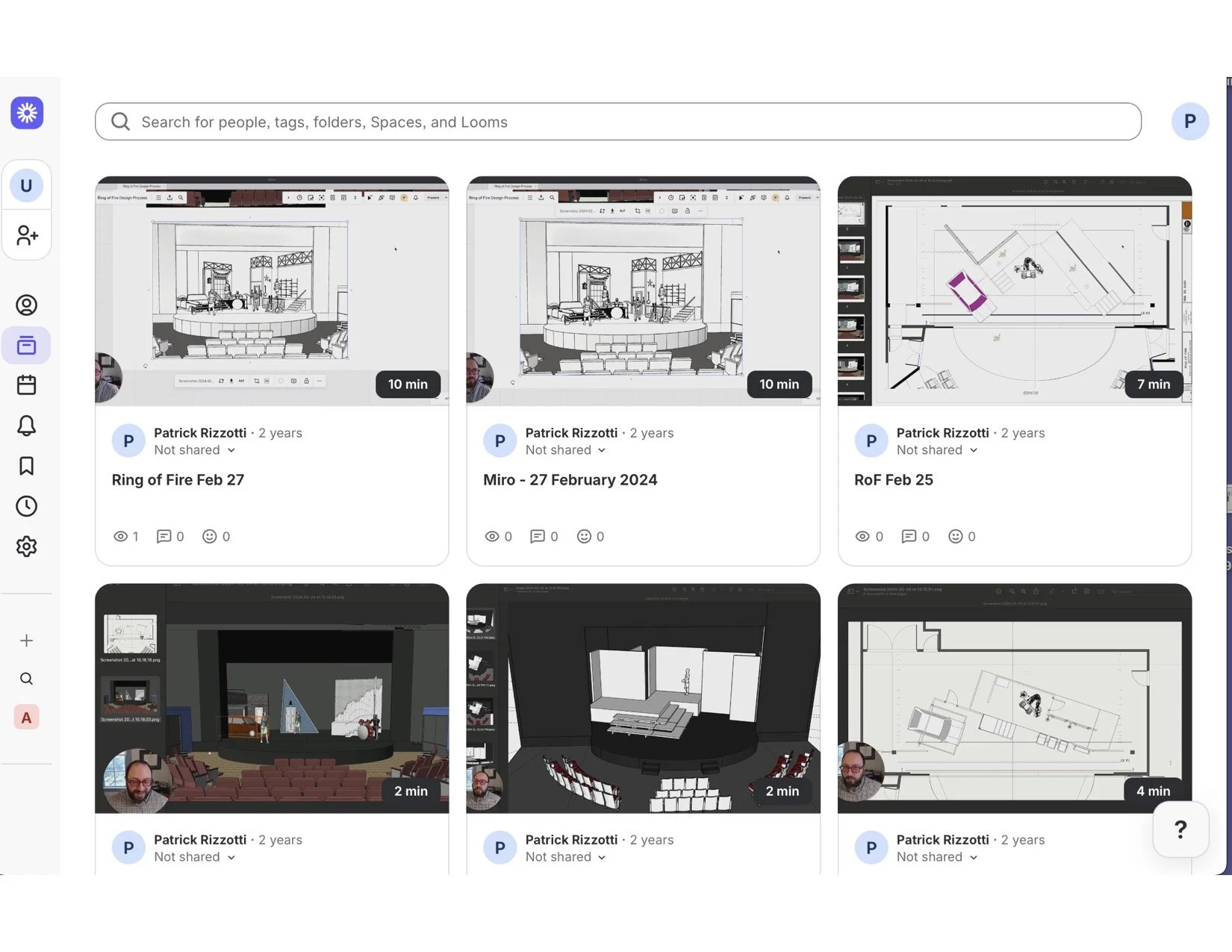
Loom recordings allowed evolving design ideas to be narrated, revisited, and reviewed independently. The exchange stretched beyond the meeting itself. Collaborators could return to proposals, sit with them, and respond after a delay.
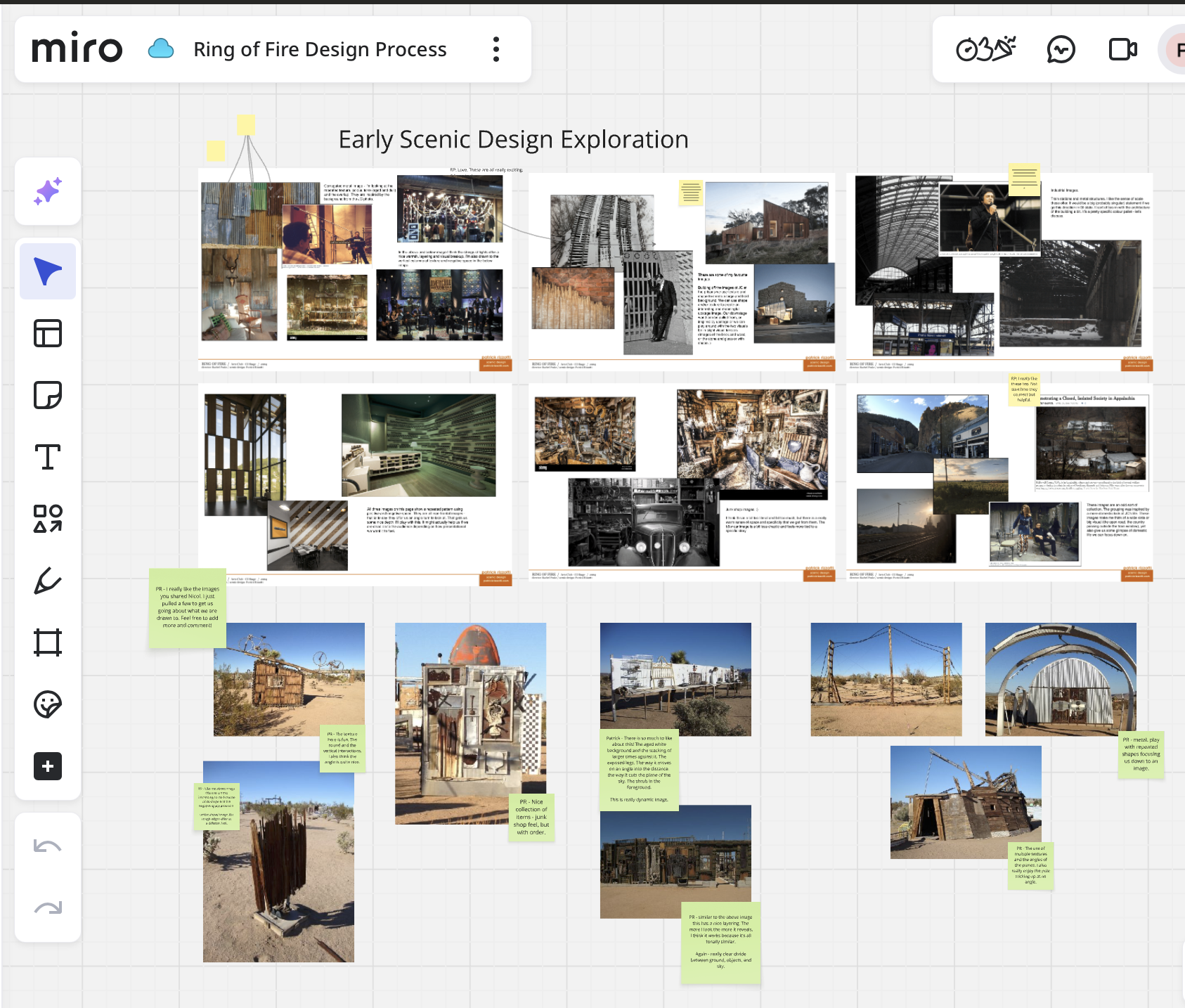
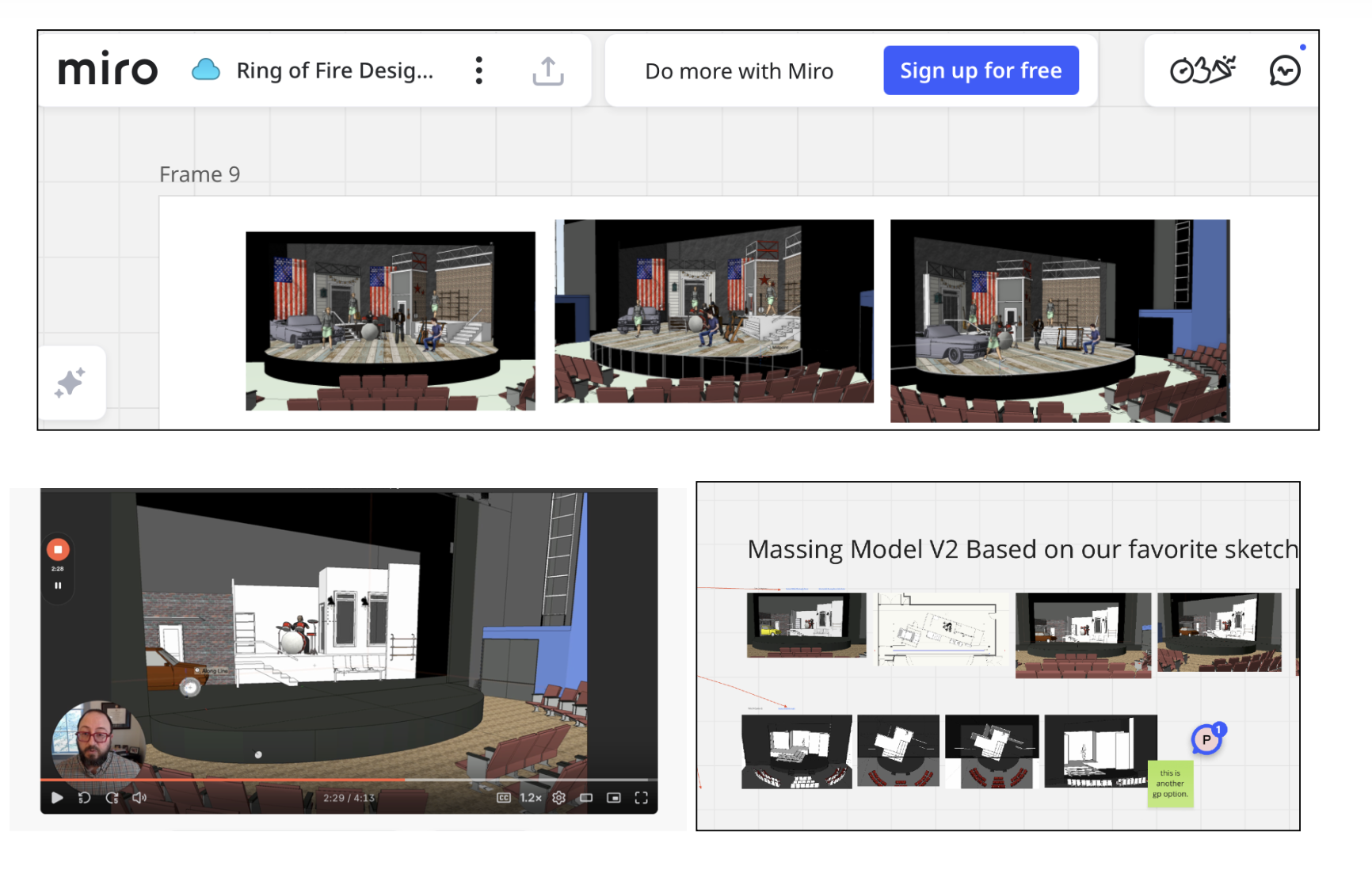
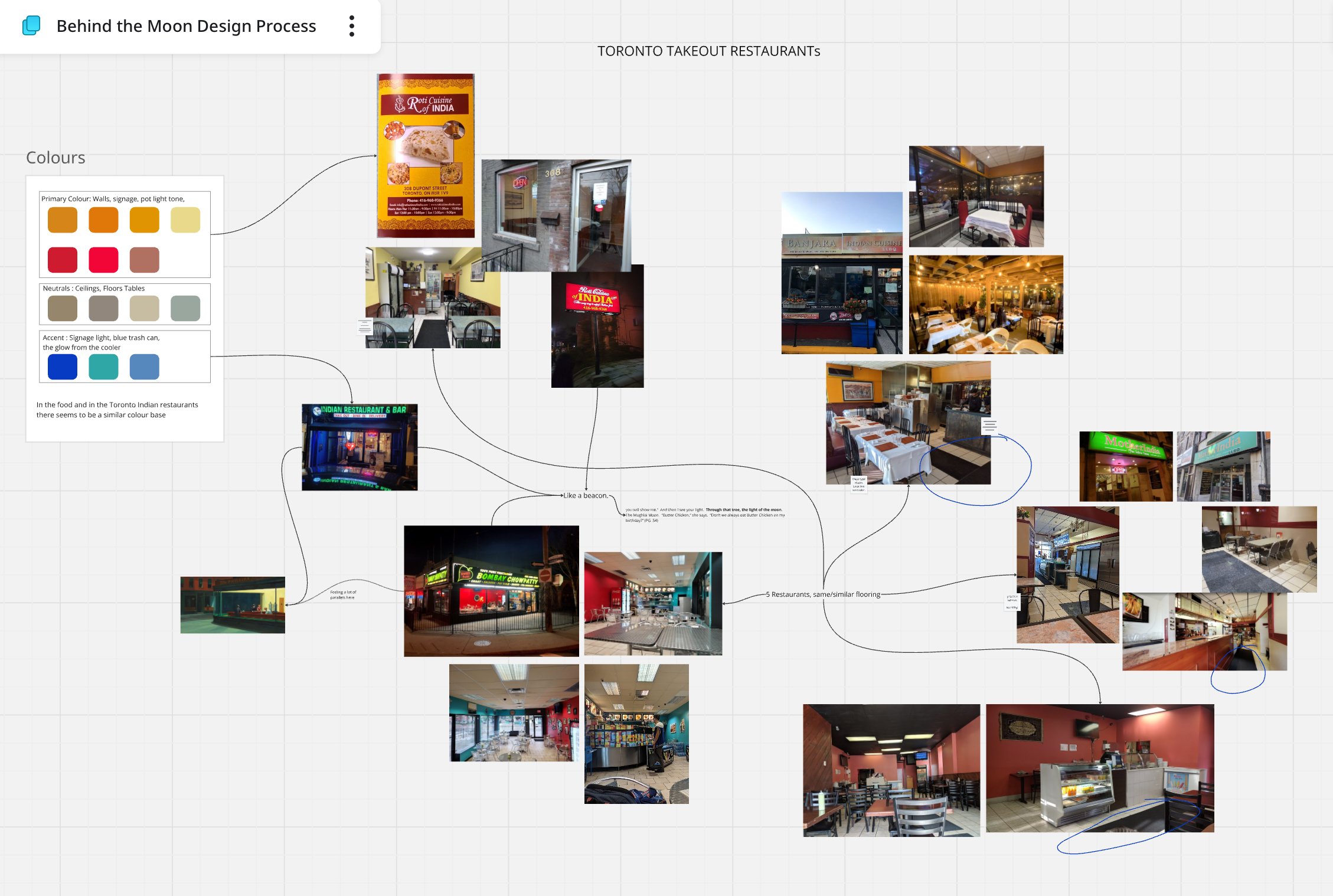
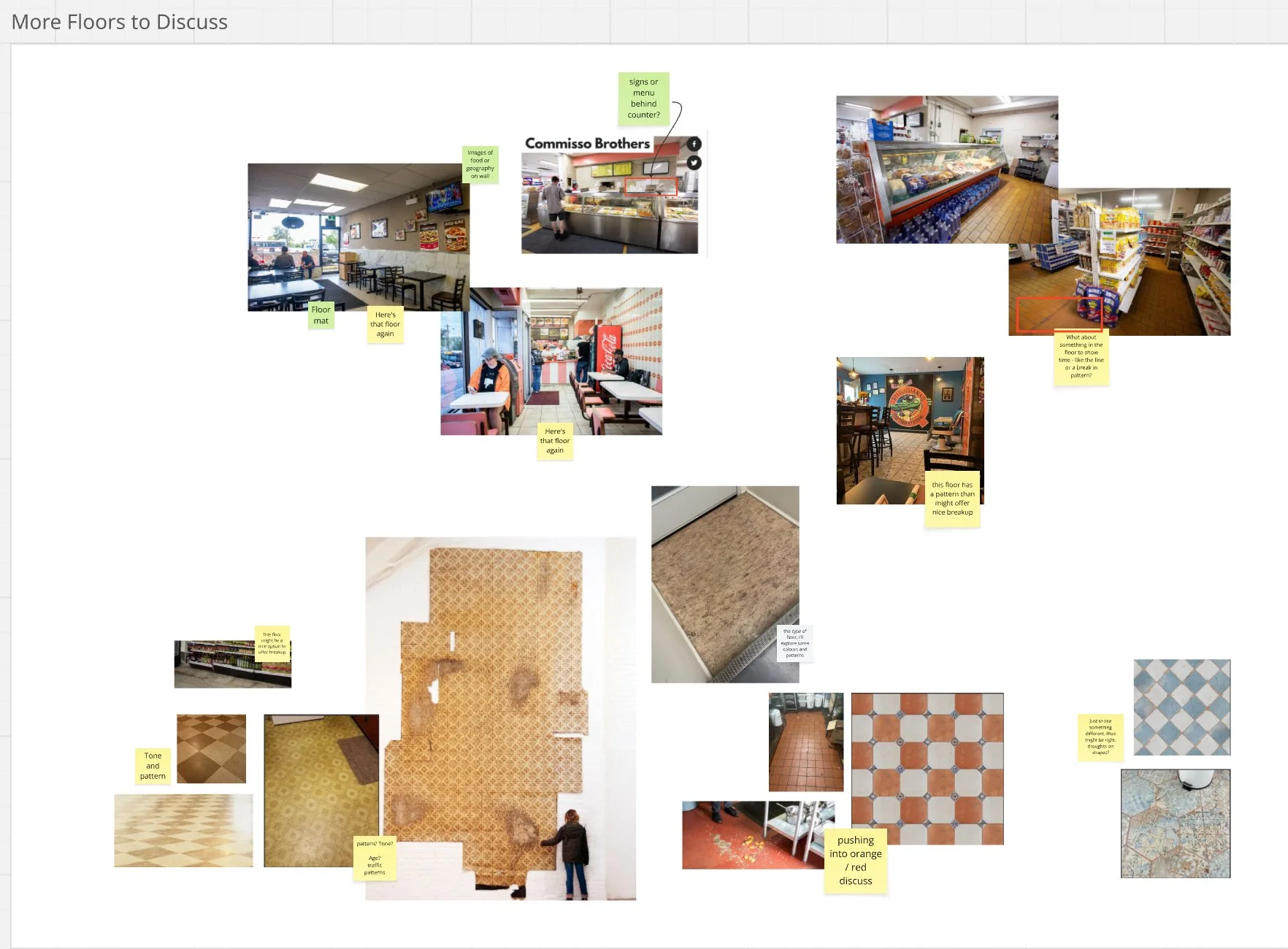
The project also showed how shared visual spaces shape participation. Miro boards, digital models, image archives, and walkthroughs became places where collaborators could navigate the developing design, compare possibilities, and revise ideas over time. The work helped clarify how design decisions move through accumulation, return, and delayed response.

Behind the Moon
(View Production Photos)
Compression, Proximity, and Real-Time Adjustment
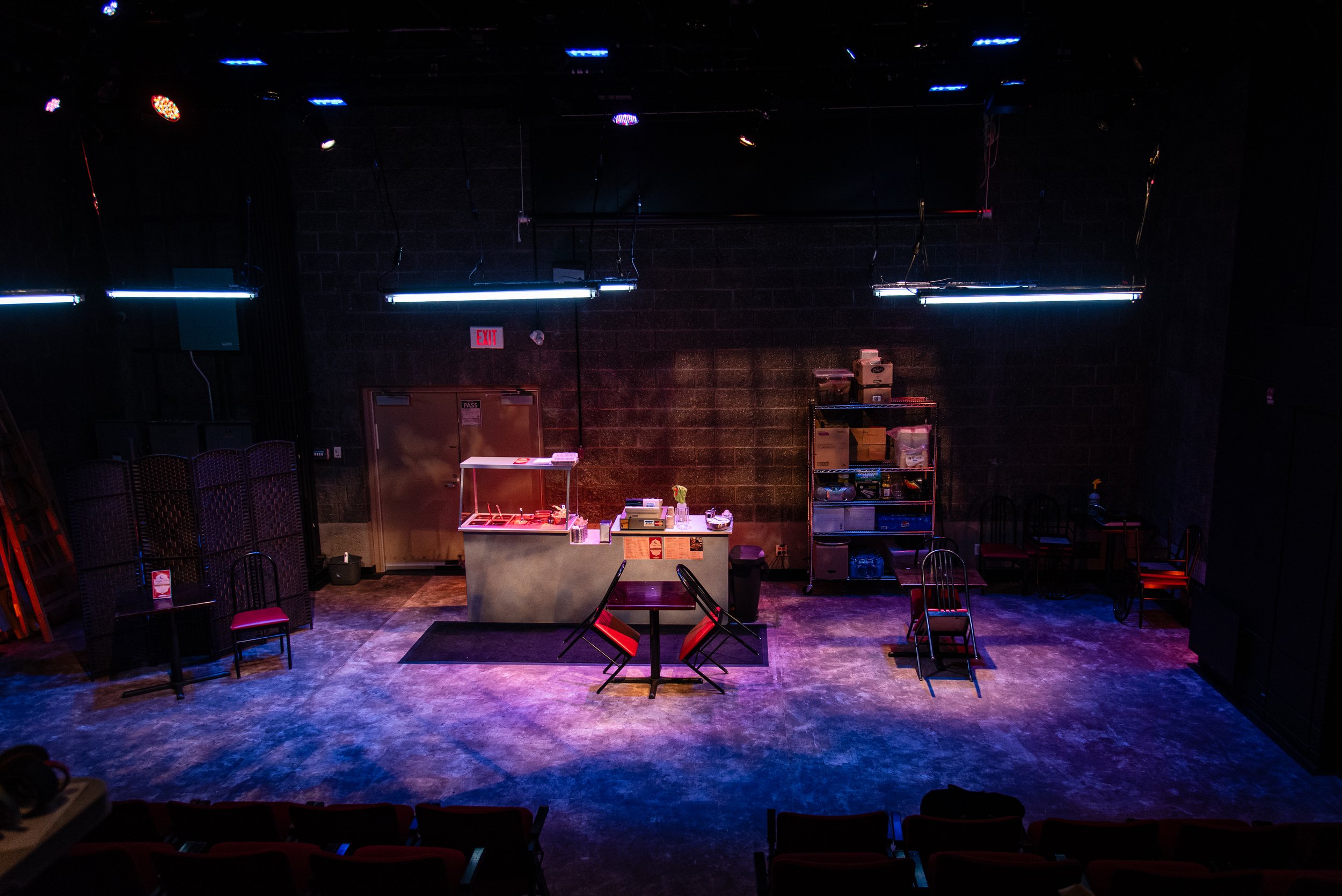
Developed for Touchstone Theatre at the Cultch’s C-Lab, Behind the Moon examined a very different kind of collaborative tempo. The room was small. The audience was close. Minor spatial decisions became immediately visible.
Unlike Ring of Fire, where much of the process moved through asynchronous exchange, Behind the Moon depended on rapid testing and adjustment in the space itself. In the room, ideas clicked quickly as we worked together in real time. Small adjustments could be tested, seen, and understood almost immediately. When a question was left outside that shared moment, it tended to linger.
The design shifted toward compression and calibration. Proximity mattered. So did the relationship between performers, objects, floor treatment, and audience sightlines.
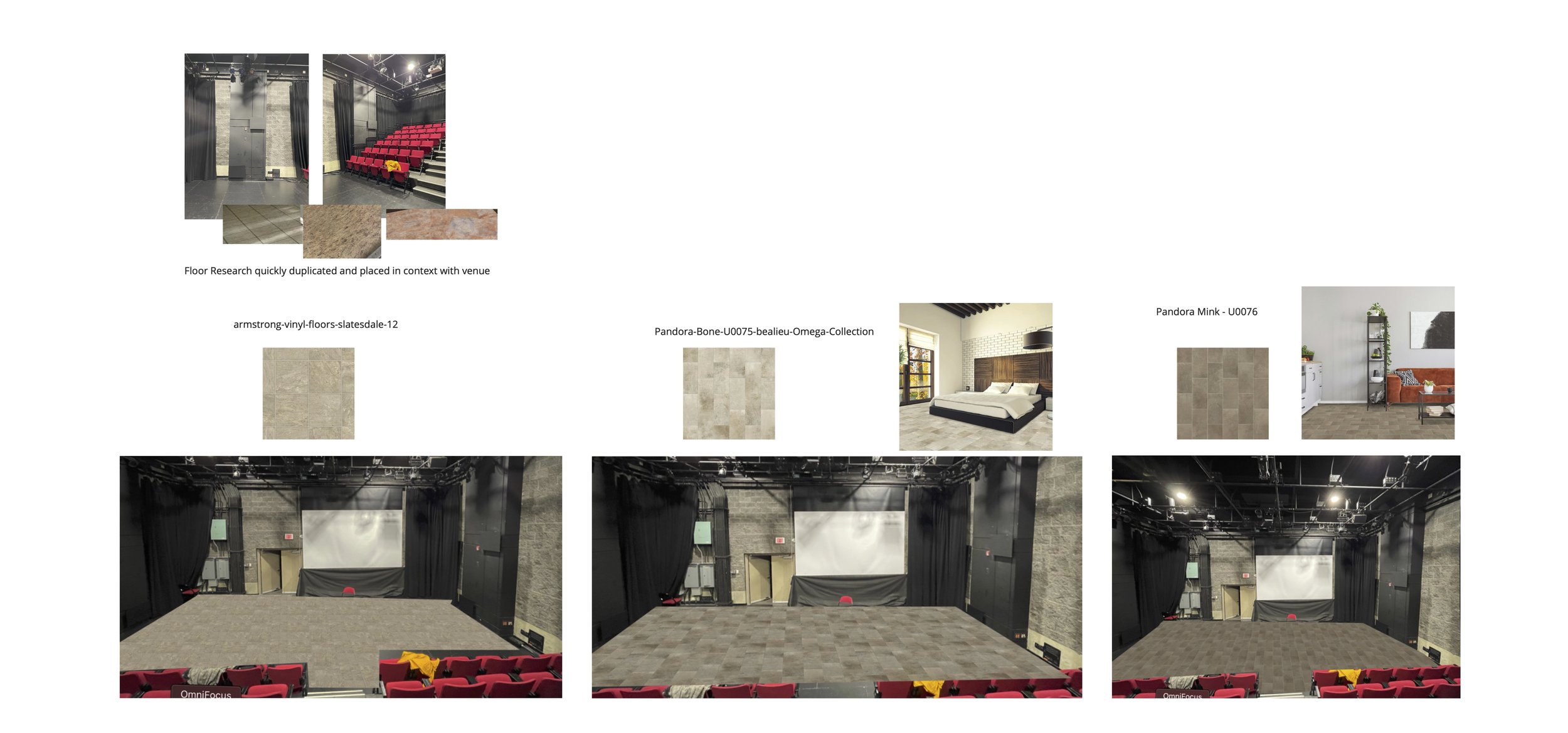
3D modelling, in-room testing, and rehearsal adjustments helped refine movement, material presence, and spatial relationships. In this context, tempo was not mainly about delay or return. It was about immediacy. Small changes carried real weight.
The project showed that collaborative rhythm is shaped not only by communication tools or production timelines, but by the architecture of the room and the audience’s physical relationship to the work. Design decisions developed through repeated cycles of observation, adjustment, and testing in the performance space.
Related Writing
The Scenographic Tempo: Digital Tools and the Rhythm of Collaboration
Critical Stages / Scènes critiques (forthcoming)